


Extensions can add length in a single sitting, but the best results come from adding a sensible amount, choosing human hair, and picking a method that suits your own hair. For a first set, adding around four inches (about 10 cm) to your natural length is the usual starting point, and our clip-in, tape-in and weft ranges are made for exactly that kind of blend.
TL;DR
- For a first set, add no more than about four inches to your natural length so the hair blends easily and does not feel heavy.
- Your own hair needs to be around 15 cm long for a natural longer style, and breakage or thinning near the root rules extensions out.
- Use human hair, match colour and texture, and have the ends cut with layers so natural and added hair merge.
- Clip-ins are the low-commitment route; tape-ins, I-tips, K-tips and wefts are longer-wear methods with their own lifespans.
- Give your hair a break every couple of months and never wear a style that hurts.
Table of Contents
- How much length can you really add?
- How long does your own hair need to be?
- Why human hair is the right choice for length
- Which method adds length best?
- How to measure and plan your length
- How to blend length so it looks natural
- Can you fit extensions yourself?
- Protecting your own hair while you wear length
- Our view: length is a quality decision first
- Choosing your length at DVH Extensions
- FAQ
- Sources
How much length can you really add?
There is no fixed ceiling, but there is a comfortable range. A certified extension specialist quoted in Salon Magazine recommends first-time wearers add no more than four inches over their natural length, because the result blends easily, looks natural and does not feel heavy.
Here is a worked example. If your hair sits at the shoulder, around 30 cm, adding 10 cm takes you to about 40 cm, a clear change that still sits believably on your own hair. Jumping from shoulder to waist in one go puts far more weight on each section of natural hair and makes the join harder to hide.
Three things decide how far you can go:
- Density of your own hair. Fine, sparse hair carries less weight comfortably. Fullness of the added hair has to match what you already have, which is why choosing the right hair density matters as much as the length itself.
- The method. Weight is spread differently by a weft, a tape and a single bonded strand.
- How often you can maintain it. Longer, heavier hair needs more careful brushing, washing and sleeping routines.
If you are after a big jump in length, build up in stages: start modestly, see how it feels over a few weeks, then go longer on the next set.
How long does your own hair need to be?
Extensions need something to blend into. A UK hairdressing textbook chapter on extension services (Hodder Education) gives a minimum of 8 cm of your own hair for textured looks and 15 cm for a natural longer style. In practice that means a short crop will not give a seamless long result, while a chin-length bob usually will.
The same source lists conditions that make extensions unsuitable: hair breakage within the first 3 to 6 cm from the root, or thinning, and it says extensions are not recommended for very fine hair. If your hair is fine or thinning and you still want more length, our guides to extensions for thin hair and gentle options for thinning hair explain how to choose lighter, more suitable styles. If you are worried about hair loss, see your GP or a trichologist first.
Why human hair is the right choice for length
When the aim is length, the added hair has to behave like yours: take heat, brush smoothly and move naturally. Allure’s guide to extensions advises using human hair only for adding length, ideally virgin remy, with colour and texture matched and a dry cut with layers to blend the two. It also notes human hair costs five to seven times more than synthetic, which is the price of hair that can be styled and worn for months rather than weeks.
Two terms you will see on our site:
- Virgin hair is human hair that has not been chemically processed or dyed, so it keeps its natural cuticle.
- Raw hair is the least handled form of human hair, with the cuticles kept aligned in one direction.
Both are at the premium end. You can browse them as virgin hair bundles and raw hair bundles. The choice between them comes down to the look you want and how much styling and colour work you plan to do.
Which method adds length best?
The right method depends on how often you want to wear the hair and how much commitment you want. Lifespans below come from the sources cited and vary with care and how fast your hair grows.
| Method | Typical wear time | Best for |
|---|---|---|
| Clip-ins | Taken out daily; the hair can last months or years with care | Occasional length, easy to fit yourself |
| Tape-ins | About 6 to 8 weeks per application | Flat, light feel along the root |
| I-tips / micro rings | 3 to 6 months | Strand-by-strand length with no glue or heat |
| K-tips / keratin bonds | 3 to 6 months | Individual, discreet length |
| Wefts | Around 6 to 12 months for hand-tied, 6 to 8 weeks for sew-ins | Length with plenty of fullness |
The figures come from the professional ICM hair extension unit (ICM) and InStyle. ICM gives tape-ins 6 to 8 weeks and both fusion and micro-link methods 3 to 6 months. InStyle gives I-tips four to six months with maintenance, K-tips three to six months, and hand-tied wefts six to 12 months with maintenance.
Clip-ins: the easiest first step
If you have never worn extensions, clip-ins let you test a length without a long commitment. InStyle describes them as the low-commitment option: they come out before bed and are manageable to put in yourself. Our clip-in extensions suit this kind of occasional or first-time length.
Tape-ins and wefts: longer wear, more fullness
Tape-ins lie flat and are re-usable when re-taped, according to InStyle. Wefts spread weight across a row, which suits those who want length and thickness together. Our genius wefts and machine wefts cover that need.
I-tips and K-tips: length strand by strand
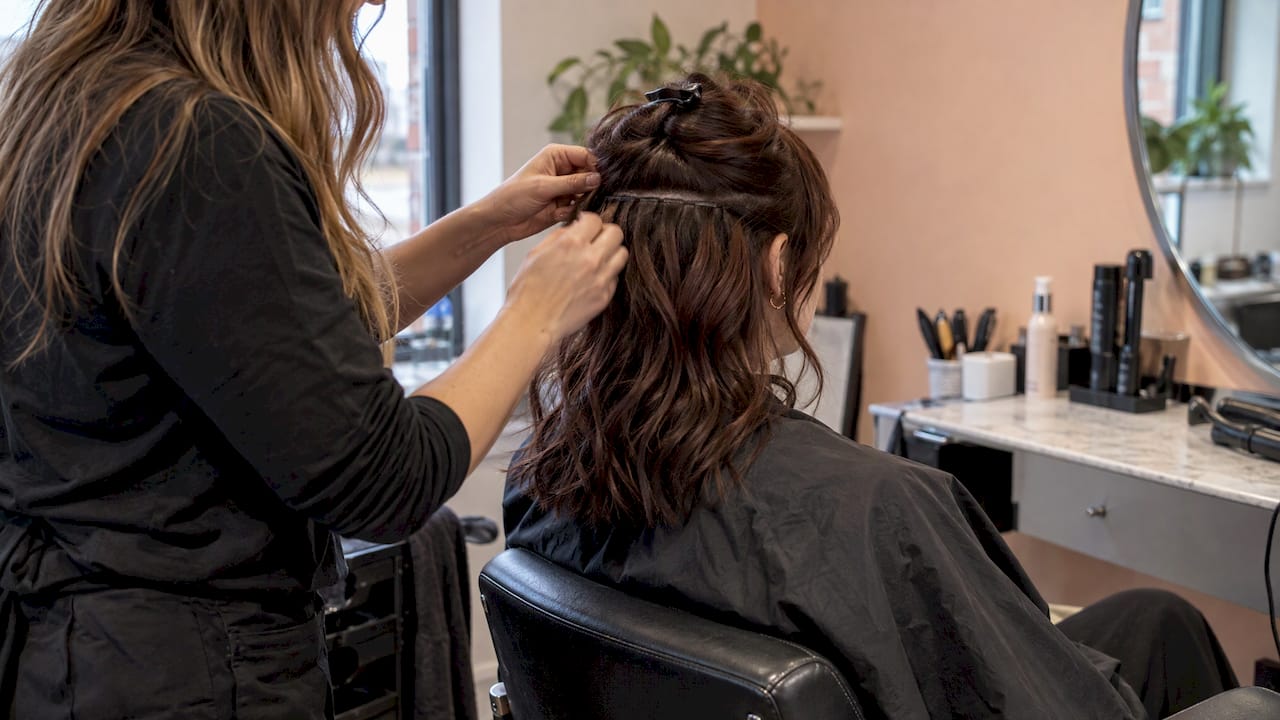
Small sections of hair carry small amounts of extension, which can look very natural on medium to thick hair. InStyle notes keratin-bond hair is not reusable, so it is a method to choose when you are sure of your length and shade.
Ponytails, wigs and closures
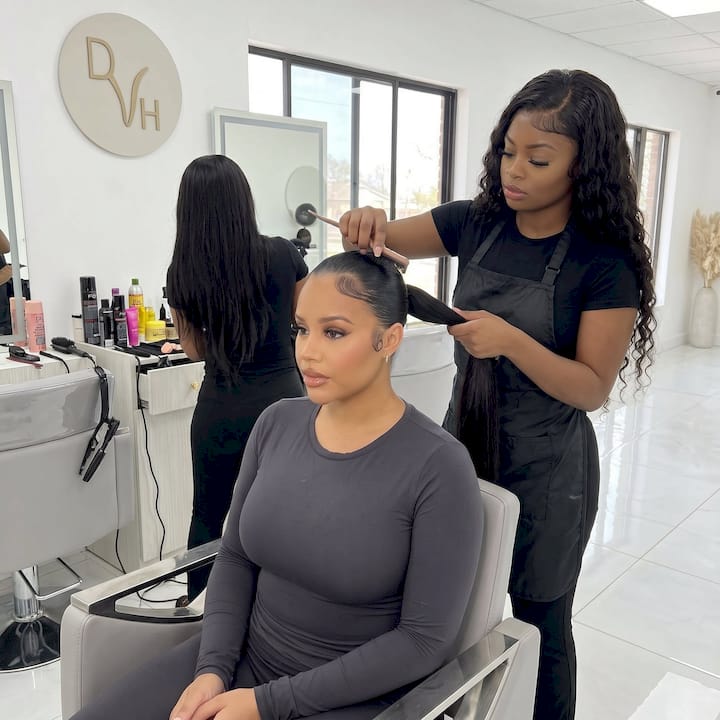
If you want length with no attachment to your own hair at all, a human hair ponytail adds length at the back in minutes, and a ready-to-wear lace wig or glueless wig changes length and style completely.
How to measure and plan your length
This is where most disappointment starts, because length is measured from the root, not from the shoulder.
- Measure your current length. Hold a tape measure at the roots at the nape and run it to the ends of your longest layer. Do the same at the front, because many people have shorter hair there.
- Decide the target. Stay within about four inches (10 cm) of your natural length for a first set, as the specialist advice above suggests.
- Allow for blending. Extensions are cut and layered into your hair, so a little length is lost to the blend. If you want a visible 40 cm finish, buy slightly longer hair than the final length.
- Match texture first. Straight extensions on wavy hair, or the reverse, will show at the join. Our texture matching guide explains how to read your own pattern.
- Match colour next. Look at your hair in daylight, and note that roots and ends often differ. Our colour matching guide walks through it, and the grey hair guide covers blending where silver is coming through.
- Choose the amount. One pack rarely suits every head; density depends on how much hair you have and how much length you add.
How to blend length so it looks natural
The tell-tale sign of extensions is a blunt line where your hair ends and the added hair carries on. A Great Lengths educator quoted in Salon Magazine says extensions are undetectable for 99% of her clients when installed correctly, but they must be layer-cut and “slither-cut”, trimming the bottom while blending in layers, to avoid visible stacks.
That gives you three practical rules:
- Cut after fitting, not before. Layering is done once the hair is in, so it follows the shape of your own cut. Allure’s advice is a dry cut with layers.
- Keep the join away from your parting and hairline. Placement a little below the crown hides it, especially on finer hair.
- Blend heat and colour. Curl or straighten your own hair and the extensions together so both read as one length.
Can you fit extensions yourself?
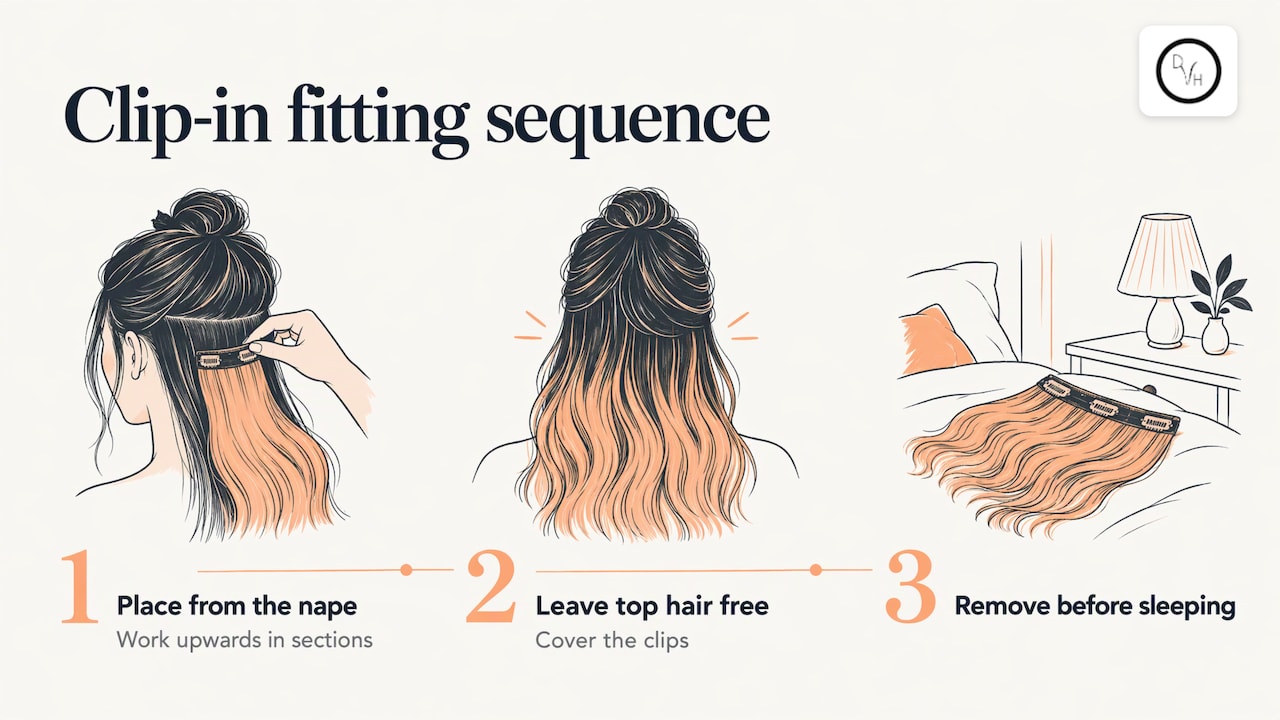
For clip-ins, yes. Place them in sections from the nape upwards, leave hair free over the top to cover the clips, and take them out before sleeping. For tape-ins, I-tips, K-tips and sewn wefts, the sources are clear that the techniques need training: ICM states that tape-ins need professional application and removal, and the American Academy of Dermatology advises having extensions fitted by a professional. Tension is the risk, so choose a method you are confident to wear and look after.
Protecting your own hair while you wear length
Added length adds weight, and weight is what causes damage. The AAD says pain or a headache means the style is too tight, which can lead to traction alopecia, a form of hair loss that can be permanent. It recommends wearing weaves or extensions for two or three months at most before giving your hair a break. If it hurts, have the extensions loosened or removed and speak to your GP if you notice thinning.
Allure shares a tip from a New York stylist: when extensions are replaced, move the attachment point about half an inch above or below the previous one so the last spot gets a rest. Our guide to the least damaging extension types goes through which methods put the least strain on your hair, and our glue-free methods guide covers heat-free options.
A simple aftercare routine
The ICM unit lists the habits that keep length looking good:
- Wash with a sulphate-free shampoo and concentrate on the scalp.
- Detangle with a wide-tooth comb, starting from the ends.
- Use heat protection and keep heat low.
- Sleep with hair in a loose braid or ponytail, ideally on a silk pillowcase.
- Book regular check-ups, and have bonded or taped methods removed properly.
We stock luxury sleep protection, heat styling tools and hair tools and accessories for this routine, and our beginner’s maintenance guide gives the full routine step by step.
Our view: length is a quality decision first
We started DVH Extensions in 2015 and our range is built around premium 100% human hair, in raw and virgin options, because we believe length only looks right when the hair itself is right.
Our approach is simple. Choose the hair first, then the method. Raw and virgin hair behave like natural hair, so they blend, style and last in a way that supports a longer look, which is the long-term value we design for.
We also think the method should fit your life. Clip-ins for occasional length, tapes and wefts for fullness, I-tips and K-tips for strand-by-strand work, ponytails and wigs when you want length without touching your own hair. That is why we offer all of them under one roof.
Start with a measured amount, match colour and texture carefully, and let your own hair set the pace.
Dvh Extensions
Choosing your length at DVH Extensions
If you are ready to choose, start with the method that suits how you want to wear your hair. For first-timers and occasional length, our clip-in extensions are the natural place to begin. For longer wear and fullness, see our genius wefts, tape-ins and I-tips, all in premium human hair, with raw and virgin bundles for those who want the highest-grade hair.
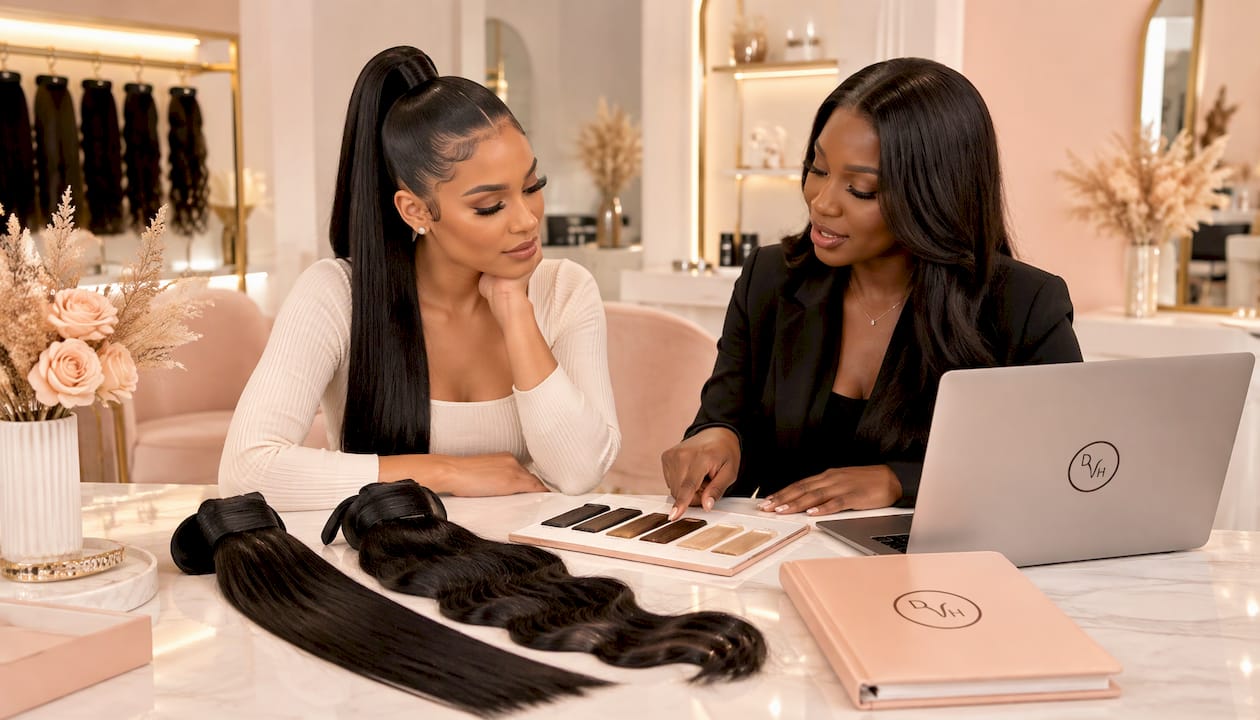
If you want help choosing, our guide to choosing the right hair extensions compares methods, textures and lengths in detail.
FAQ
How much length can you add with extensions?
For a first set, about four inches (10 cm) is the recommended maximum for a natural, light result. Experienced wearers go longer, but the more length you add, the more weight your own hair carries and the more careful the blend needs to be.
How long does my hair need to be for extensions?
A UK hairdressing text gives 8 cm as the minimum for textured looks and 15 cm for a natural longer style. Hair that is breaking near the root or thinning is not suited to extensions.
Which extensions are best for adding length to fine hair?
Lighter methods spread across more sections tend to suit finer hair, and very fine hair is a case where extensions are not generally recommended. Our guide for thin hair explains how to choose a gentle option.
How long do extensions last?
It depends on the method. Tape-ins last around 6 to 8 weeks, I-tips and K-tips around 3 to 6 months, and hand-tied wefts up to 12 months with maintenance. Clip-ins can last months or years with proper care.
Can people tell you are wearing extensions?
Not when the hair, colour and texture are matched and the ends are cut with layers. A visible blunt line or mismatched shade is what usually gives extensions away.
Sources
- Using Hair Extensions to add Length, Colour and Volume, Salon Magazine
- Hair Extension Services, Hodder Education
- Allure’s Complete Guide to Hair Extensions
- How Do Hair Extensions Work?, InStyle
- How to prevent hair damage from a weave or extensions, American Academy of Dermatology
- Hair Extensions, ICM


